Whoa!
I keep finding new metrics on Solana that feel underrated. My first impression was speed, but deeper traces tell a different story. Initially I thought on-chain analytics were mostly for researchers and bots, though then I noticed wallet-level patterns that actually reveal user behavior and token flows across clusters, which changed my view about what everyday traders can glean. Something felt off about dashboards that only show price.
Really?
I dug into token trackers to see which addresses mattered most. Most explorers surface top holders and transfers, but they gloss over program-level nuances. On one hand you can export a CSV and run dozen-of-scripts to correlate programs, stake accounts, and wrapped token flows, though on the other hand a well-designed token tracker that integrates labels, program interactions, and high-level visualizations will get you answers in minutes instead of a day of shell scripts and guesswork. My instinct said there must be a better single-pane tool.
Hmm…
I started favoring explorers that are lightweight and quick to load. Tools that balance raw data dumps with readable token histories save so much time. Actually, wait—let me rephrase that: what matters isn’t just the raw throughput, it’s how easily you can trace a token from mint to market, see program interactions, and identify whether transfers are likely internal, liquidity events, or wash trades, because context flips a benign transfer into a meaningful signal. I rely on token histories and labeled addresses for quick decisions.
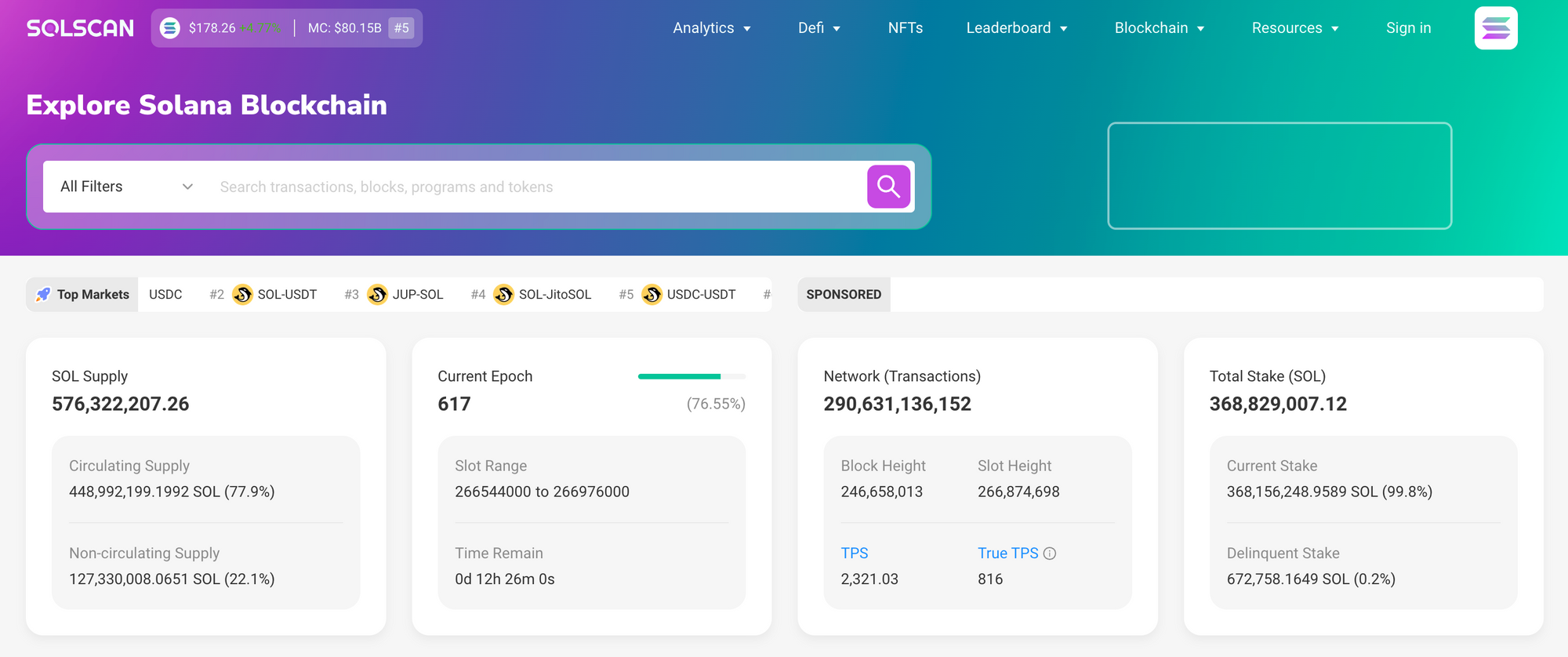
How I use explorers day-to-day
I’ll be honest—
For quick lookups and reliable token tracking I usually open an explorer tailored to Solana. When I need labels or program decoding, I reach for solscan. Seriously, it isn’t perfect — no explorer is — but the ability to click through a transaction, inspect inner instructions, and immediately see holder concentration speeds up analysis more than any ad hoc script I’ve scribbled in a terminal. Oh, and by the way, there’s room for improvement in labeling accuracy.
Here’s the thing.
Traceability improves when explorers include program-level decoding and label contributions. Many on-chain events are opaque until you see the instruction set executed by a program. Initially I thought token transfers were the main signal, but after following a few DeFi composability chains I realized that instruction sequences, inner-logs, and CPI calls often carry the guardrails that distinguish a legitimate swap from a meta-transaction or proxy transfer—so the devil’s in those inner details. This part bugs me: some explorers hide inner instructions behind extra clicks.
Whoa!
I’m biased, but UX matters a lot when scanning hundreds of tokens. Fast filters, address tagging, and token holder charts are indispensable. On one hand flashy visuals can mislead, though on the other hand raw CSVs are unusable for fast decision making, so the right balance is interactive charts that let you drill into the exact transaction and its associated program logs. I often mutter ‘somethin’ ain’t right’ when labels are missing…
Okay, so check this out—
You can detect rug patterns by combining volume spikes with holder concentration. A good token tracker surfaces top movers and recent token mints quickly. If you’re running a portfolio or auditing a new mint, cross-referencing transaction signatures, account creation dates, and program logs will reveal whether the supply change was a controlled mint, airdrop, or an exploit, which is critical for risk assessment. This saved me time when vetting a DeFi pool last month.
Oh—and a couple quick heuristics I use:
- Check mint and freeze authority activity first; weird mint patterns are a red flag.
- Correlate recent holder distribution with exchange inflows; concentrated holders plus sudden volume often precede dumps.
- Inspect inner instructions and CPI calls; they explain whether a transfer was mediated by a program or initiated by a user wallet.
- Label provenance matters; a labeled address tied to a reputable program reduces my suspicion, though labels can be wrong or stale.
I’m not 100% sure about everything, and I know some folks will disagree. On one hand, explorers should be exhaustive. On the other hand, making data readable is very very important. My instinct said to automate more, but automation without human checks can miss nuance, so it’s a mix: quick tools for triage, deeper logs for confirmation.
FAQ
Which metrics should I watch first?
Start with mint history, holder concentration, and recent top transfers. Then check program instructions and inner logs to understand the context. That sequence catches most tokens behaving oddly.
Can I trust on-chain labels?
Labels are helpful but imperfect. Treat them as starting points, not gospel. If a label feels off, dig into transactions and program calls—your own pattern recognition will catch somethin’ the label missed.